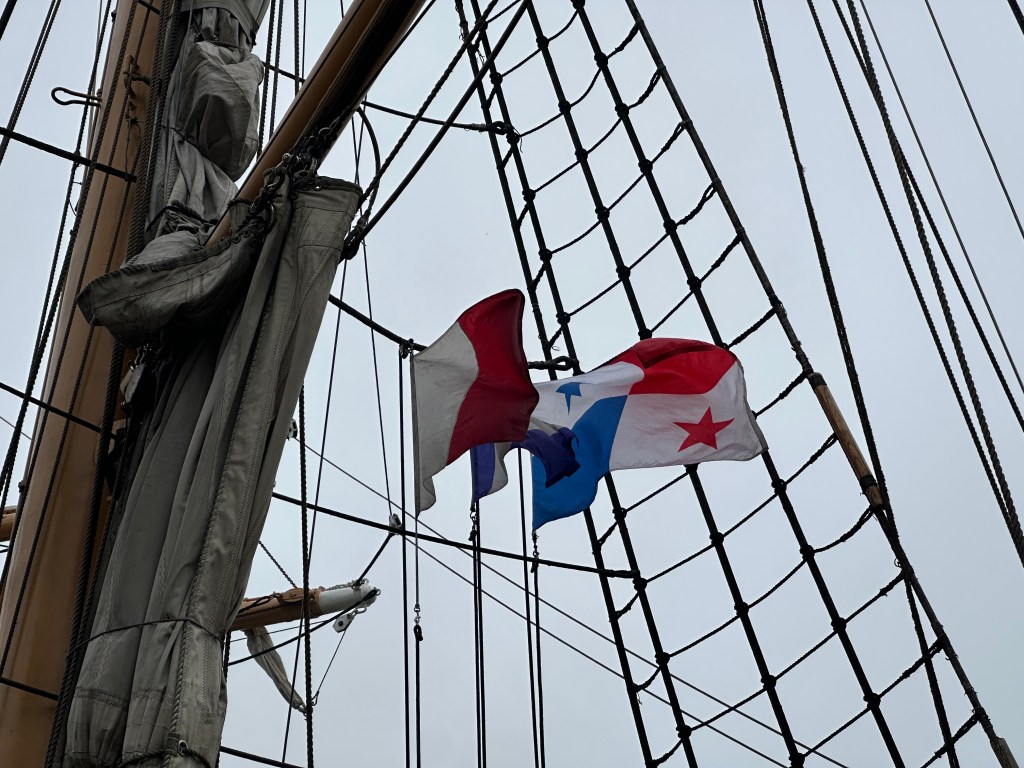
This fall, I sailed through the Panama Canal onboard the barque USCGC Eagle. Christina Henríquez’ The Great Divide prepared me to understand the canal’s history. It should be required reading.
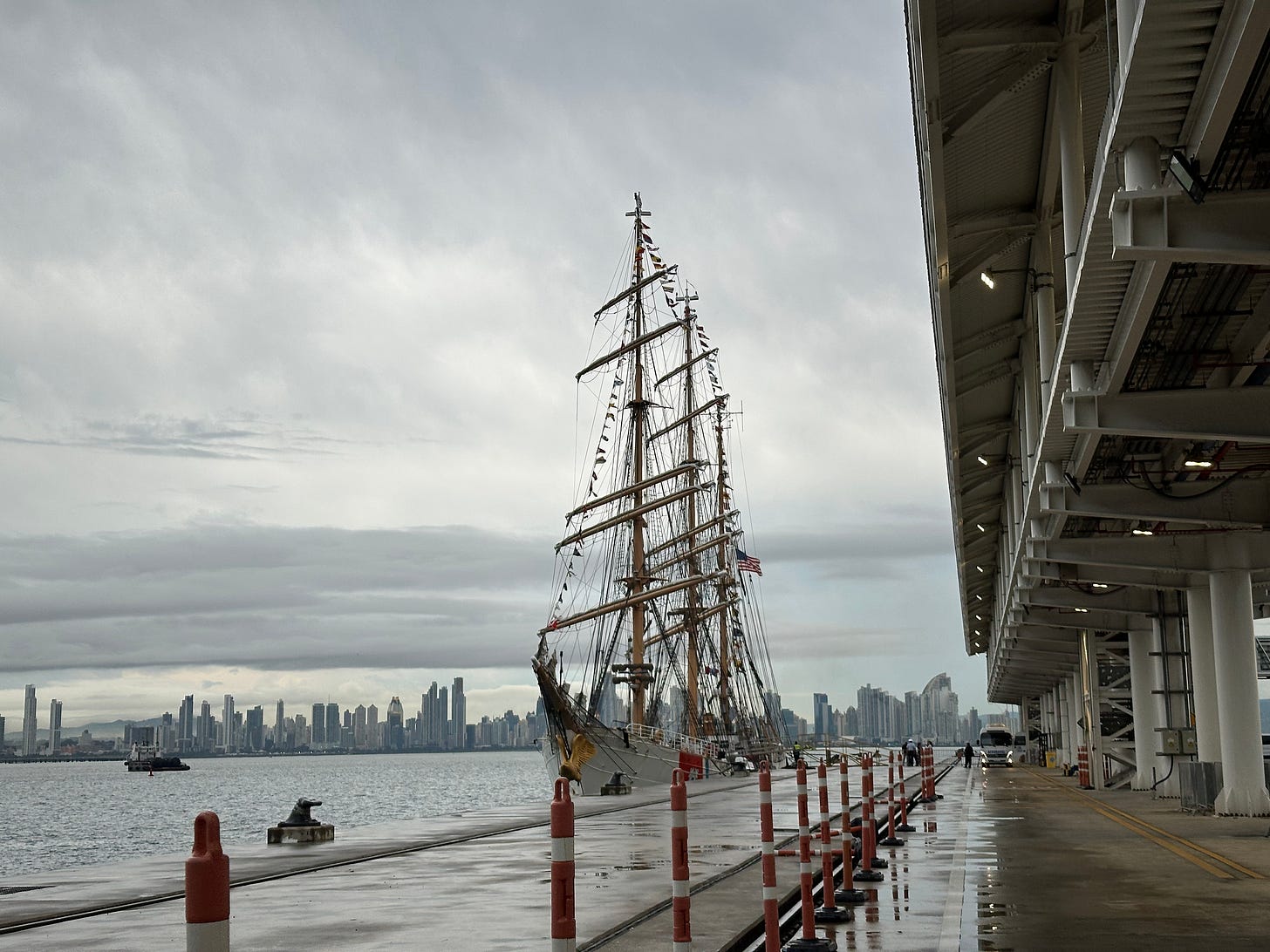
USCGC Eagle docked in front of Panama City
While earning her MFA from the Iowa Writers’ Workshop, Panamanian-American writer Cristina Henríquez—now author of multiple award-winning books about Panama and Panamanian characters—says she only submitted work about the United States and North American characters in her classes.
It was the workshop’s loss.
Henríquez’ latest novel, The Great Divide (Ecco, 2024), is both a stunning multi-perspective, place-based novel and a comprehensive history lesson on the Panama Canal. And as the United States continues to threaten Panamanian sovereignty, The Great Divide remains relevant and essential two years after its publication and over a century after the Panama Canal opened.
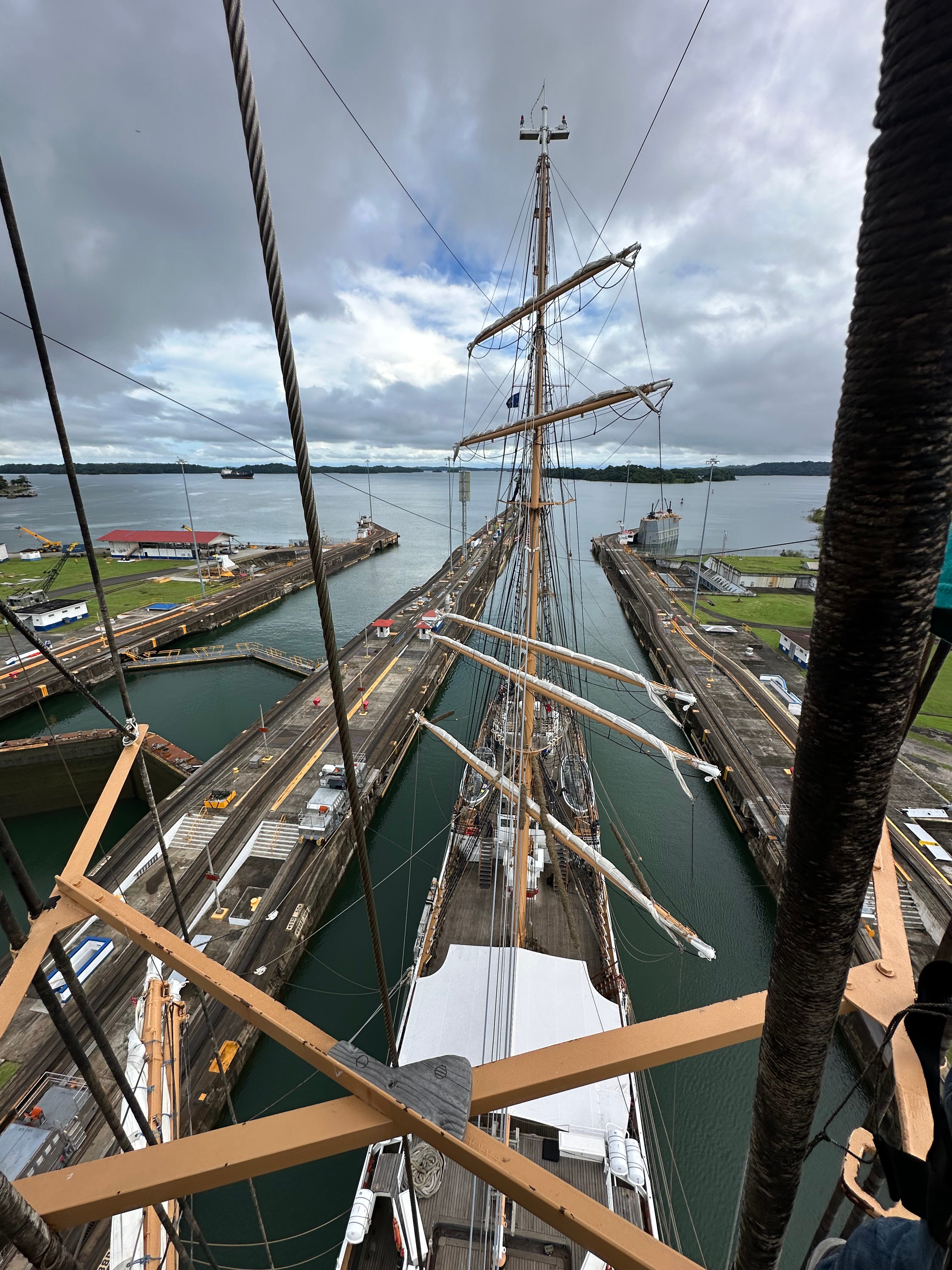
USCGC Eagle in the Panama Canal
Henríquez takes on as many perspectives as there were diverse communities involved in the creation of the canal. Ada is a young woman from Barbaros who comes to Panama to send money home for her sister’s medical care. Omar is a Panamanian canal digger whose father fears the canal’s effect on their home and livelihood. Marian comes to Panama with her husband, an American doctor seeking to combat tropical illnesses among the canal workforce. Then there’s Molly, a young American photographer whose parents work in the canal zone, and Jaoquín and Valentina, a Panamanian couple trying to save a town now buried under the reservoir that feeds the canal. Through their stories, Henríquez honors the different cultures the canal converged in Panama while holding the American Panama Railroad Company accountable for its racism, mistreatment of workers of Color, and disregard for Panamanians.
Henríquez’s thorough research shines. The Great Divide is accurate from big picture issues to the little details. Molly works for The Canal Record, the American newspaper in the canal zone. Accurately, the editor tells her they don’t cover “local disputes” when she tries to submit a piece about Valentina’s protest over damming the Chagres River. And Henríquez alludes to three-time Panamanian president and poet Belisario Porras when Omar’s father speaks about the canal:
La Boca was Francisco’s name for the canal, how he thought of it in his mind: a mouth, a gaping hole, ravenously consuming everything in its path. It was as his hero, the great Belisario Porras, had said: Panamá was being swallowed up by the United States. (69-70)
In conversation with sweeping English-language works of nonfiction about the canal, including Julie Greene’s The Canal Builders and Michael E. Donoghue’s Borderland on the Isthmus: Race, Culture, and the Struggle for the Canal Zone, The Great Divide takes the canal’s history and makes it accessible. There’s a reason it’s one of the only books for sale in the gift shop of the Panama Canal Museum in Panama City; Henríquez’ frames her highly accurate historical fiction with stunning prose and geopolitical commentary, like when Marian describes the isthmus itself:
Three million years earlier, Marian had read, underwater volcanoes had erupted and sent great reservoirs of sediment up through the surface, connecting two continents and forming the bridge of land upon which they all stood. Now, evidently, the task was to divide it again, to open the land from the sea. What nature had accomplished, men wanted to undo. (27)
And it still rings true. In the two years since The Great Divide’s publication, the president of the United States has threatened another invasion of Panama to “retake” the canal and taken a nearby country’s president prisoner. The Panama Canal Authority has proposed an additional reservoir to feed the canal’s watershed as climate change-driven drought decreases the traffic the canal can support—as global conflict increases shipping and military vessels through the route. The Great Divide and its insights into the canal are more necessary than ever.
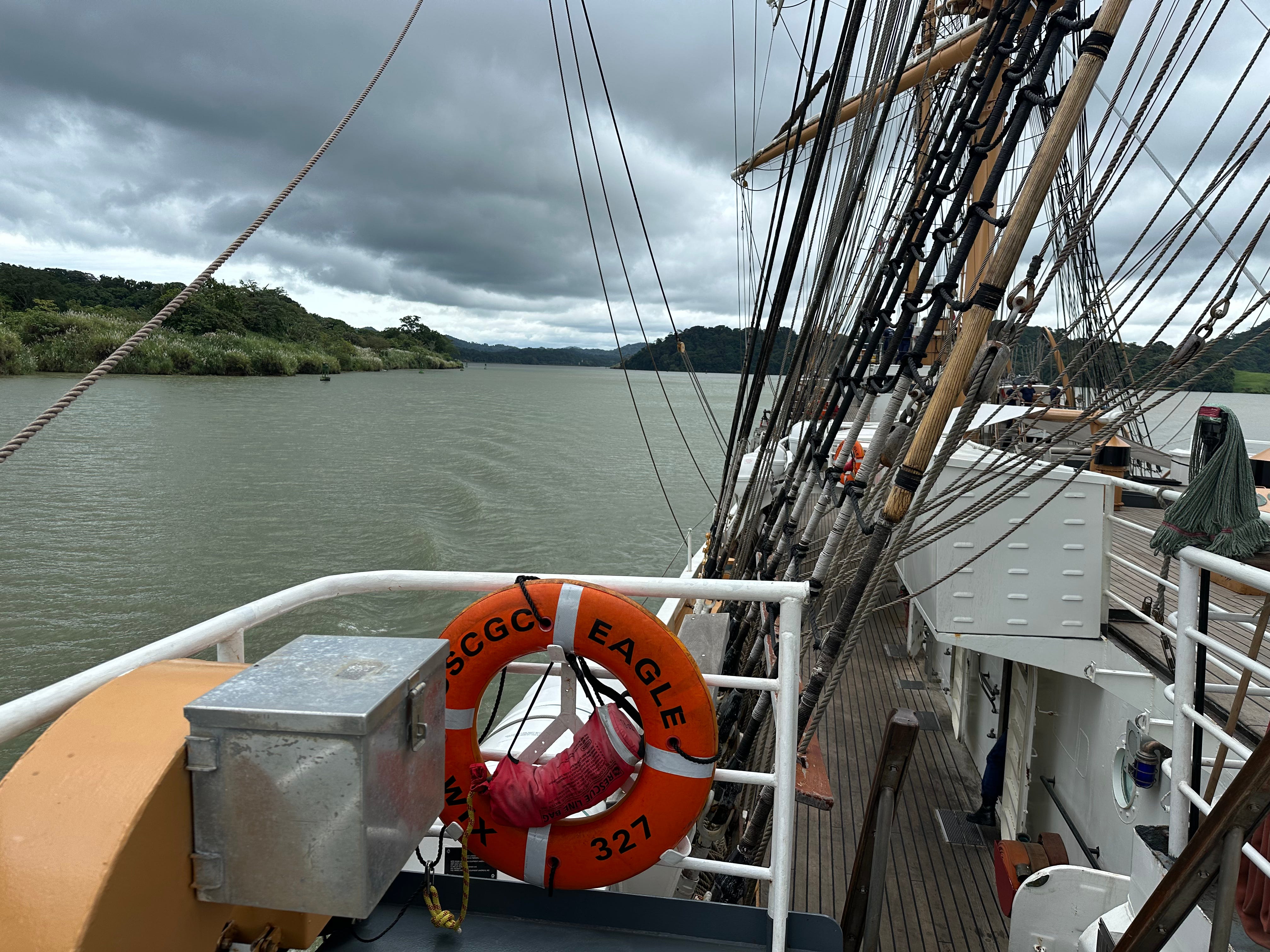
USCGC Eagle in the Panama Canal


 Kira Rambles
Leave a reply to redbellfarm314 Cancel reply