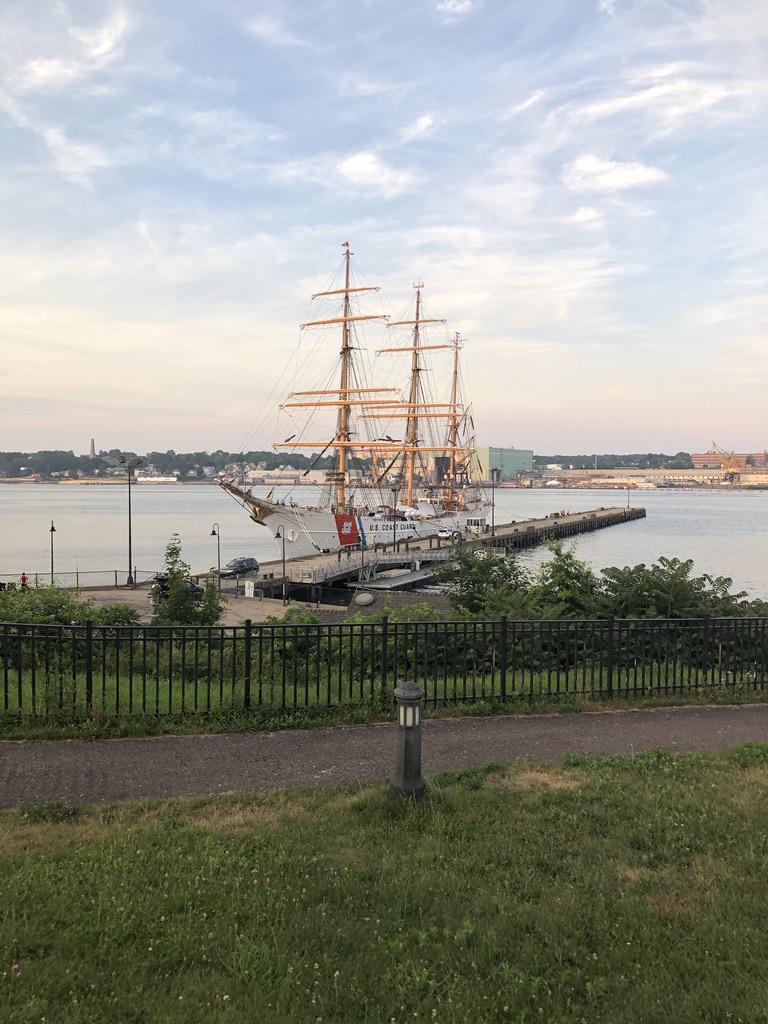
When the ARM Cuauhtémoc hit the Brooklyn Bridge on May 17th, the news coverage made sure to mention the bridge was fine. They should have named the two sailors who died instead.
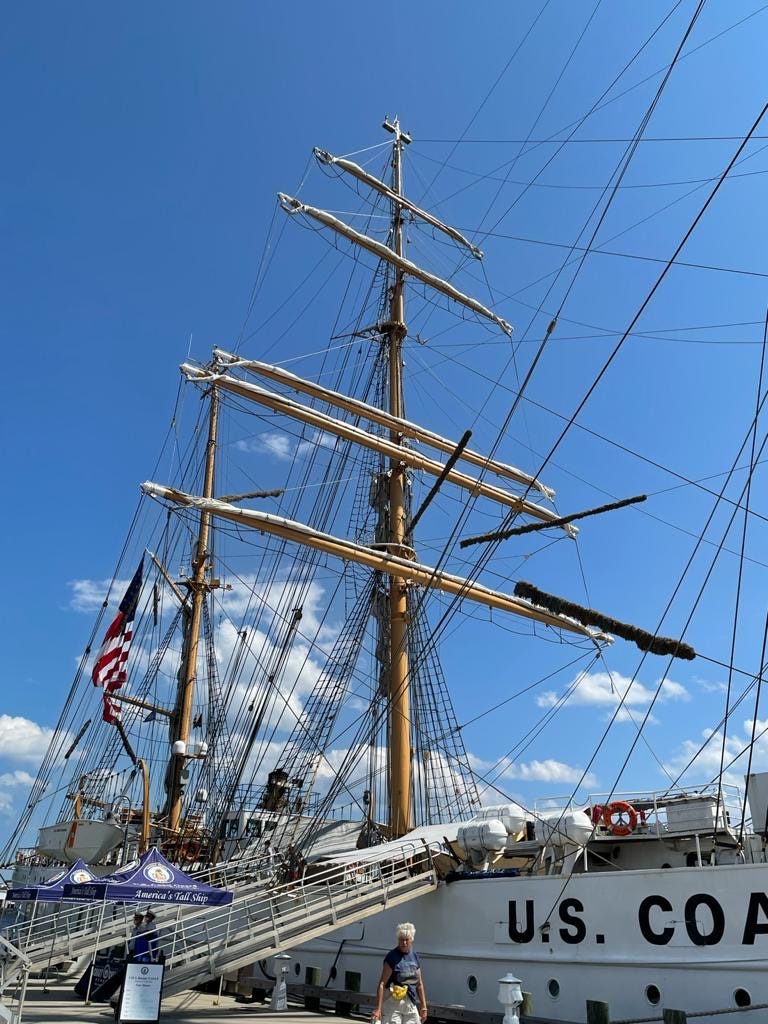
USCGC Eagle
When the Mexican Naval tall ship ARM Cuauhtémoc hit the Brooklyn Bridge on May 17th, snapping off all three of her topmasts, it killed a 20-year-old cadet and a 23-year-old member of the ship’s permanent crew, both of whom were lined up with other crew and cadets on the barque’s yards as it backed out from a slip at the South Street Seaport.
I followed news of the aftermath closely—because I love tall ships, because the Cuauhtémoc was built in Bilbao, Spain, where I lived for a year and a half, and because anything involving a military sail training ship reminds me of my sister. My twin graduated from the United States Coast Guard Academy and spent parts of multiple Summers on the barque Eagle, the Coast Guard’s sail training ship. I saw her in América Sánchez, the cadet who died, and her crew mates in Adal Jair Maldonado, the late sailor whose friends called him “sea cowboy” and said he had always dreamed of sailing on the Cuauhtémoc. I understand that desire. My sister applied to the academy because we worked on tall ships in the Summers in high school, she wanted the 100 ton master’s license all graduates earn, and she wanted to sail on Eagle. I get to sail on Eagle as a civilian trainee through Tall Ships America’s partnership with the Coast Guard to train sail training professionals in August.
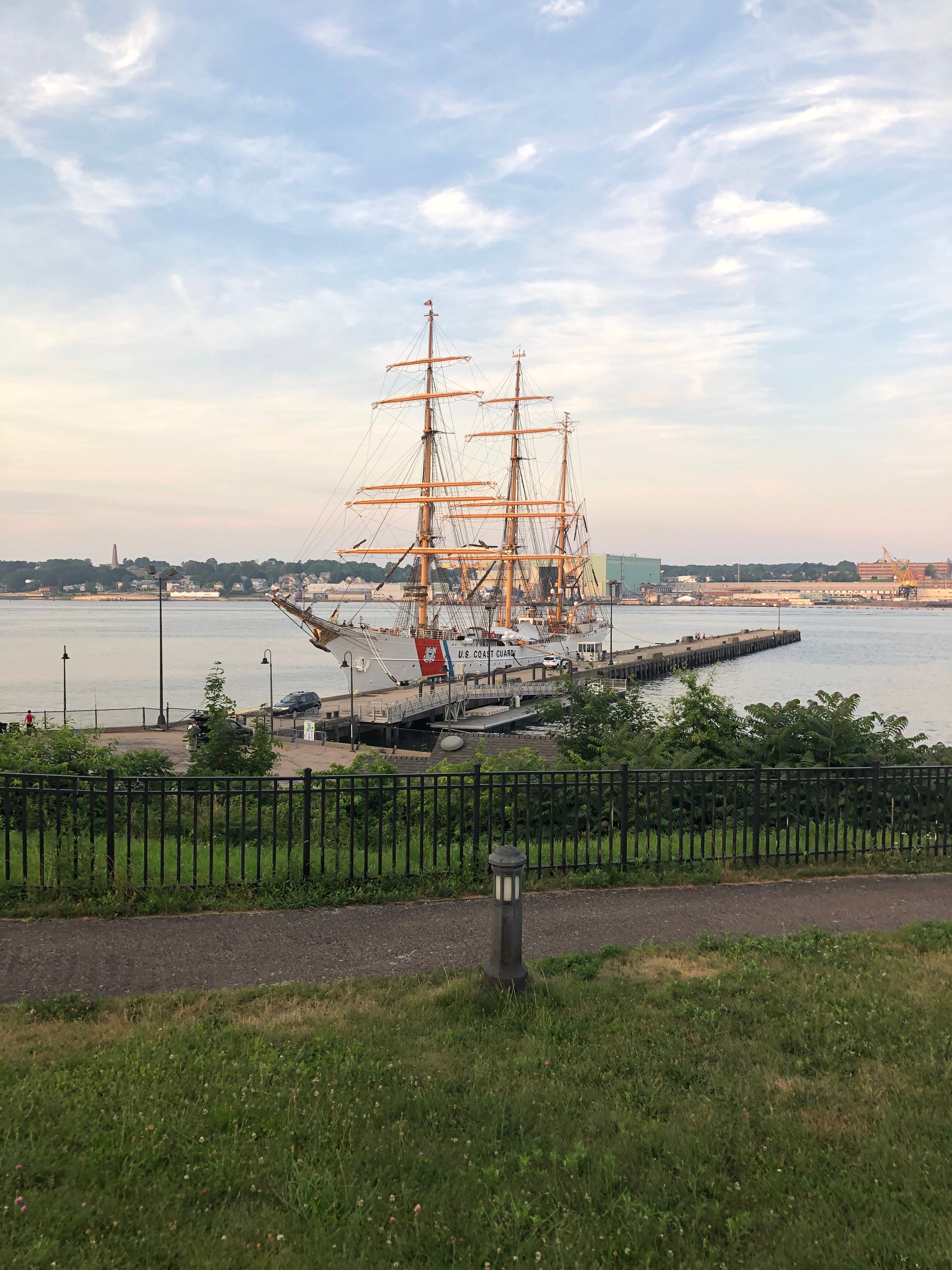
The USCGC Eagle, a barque that shares a rig design with the ARM Cuauhtémoc. Cuauhtémoc was built in Bilbao, Spain in 1981, the last of a series of four barques modeled after the Eagle specifically for use as sail training vessels for Latin American navies: Colombia’s Gloria, Ecuador’s Guayas, and Venezuela’s Simón Bolívar.
I read every article I could find about the Cuauhtémoc in English- and Spanish-speaking news outlets, and the Instagram algorithm started showing me an alarming number of video reels detailing the collision—including people falling to deck from the rigging. The articles in English, in CNN, NPR, MSNBC, NPS, and Fox, all mentioned that the bridge was fine. In the first week—that I saw—not one named the victims. The first article I found that acknowledged Sánchez and Maldonado was in the BBC’s Spanish outlet BBC Mundo. On the 19th, a Reuters article acknowledged the deceased included a “female cadet and a male Marine” after Mexico’s president Claudia Sheinbaum shared that information in a press conference, but the coverage did not name either.
I know very little about the East River or South Street Seaport. I am not qualified to comment on why the Cuauhtémoc hit the Brooklyn Bridge. What I do know is that this is not the first fatal accident on a prominent tall ship. Two crew members died when the Bounty sank in Hurricane Sandy in 2012. A crew member was killed on Eagle in 1980 during a mast-stepping operation and another in 1998 fell to deck from the rigging and died in route to medical care. And although the incident was thankfully not fatal, the Eagle no longer docks at the Coast Guard Academy after it hit the Gold Star Bridge on the Thames River.
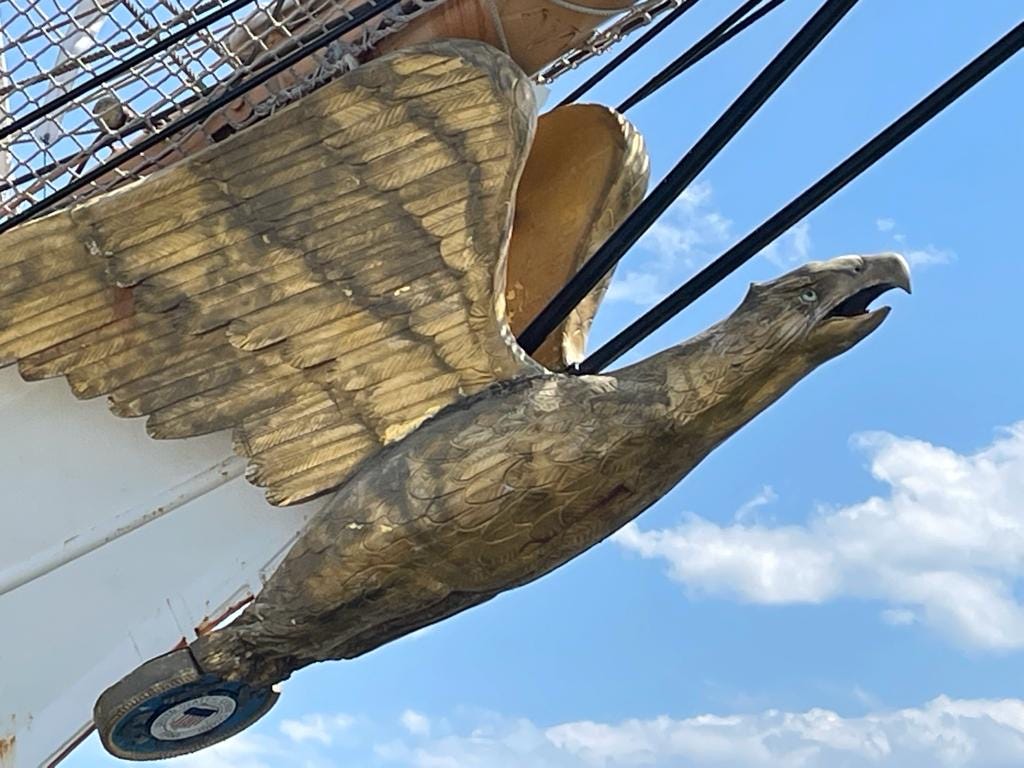
The Eagle’s figurehead
None of these accidents should have happened. The Cuauhtémoc collision has prompted analysis of operational vulnerabilities at South Street Seaport. Some compare the incident to the Francis Scott Key Bridge collapse in Baltimore in 2024 after a container ship collided with it. This reflection is desperately needed, and the 1998 accident on Eagle led to changes in the barque’s policy for crew working aloft. When my sister and I talked about the Cuauhtémoc collision, she told me the Eagle no longer allows crew and cadets to be aloft when docking or casting off.
“Policy is written in blood,” she said.
But the difference between those accidents on the Bounty and Eagle and the Cuauhtémoc is that in the aftermath of accidents on American tall ships, the news coverage named the victims. Robin Walbridge. Claudene Christian. Greg LaFond.1
In a time when dehumanizing people from Latin America is central to American immigration policy, it feels both intentional and incredibly harmful for the English-language coverage of the Cuauhtémoc to not name the Mexican victims of the tragedy. Yes, the ship was damaged. No, the bridge was not. Ultimately, both of those things are fixable. The loss of life is not. It would be one thing if the families of the victims wanted to protect their privacy, but the BBC Mundo article goes to show that the names of the deceased were publicly available. American news outlets just didn’t seek them out.
Which is all to say, the collision was tragic not because of the damage to the ship or the potential damage to the bridge, though both are concerning and sad, but because América Sánchez and Adal Jair Maldonado died.
- The only immediate news coverage of these accidents that did not name the victim was the 1980 incident on Eagle, and the New York Times article covering it specifically states the Coast Guard did not release the deceased seaman’s name. ↩︎

 Kira Rambles
Leave a comment