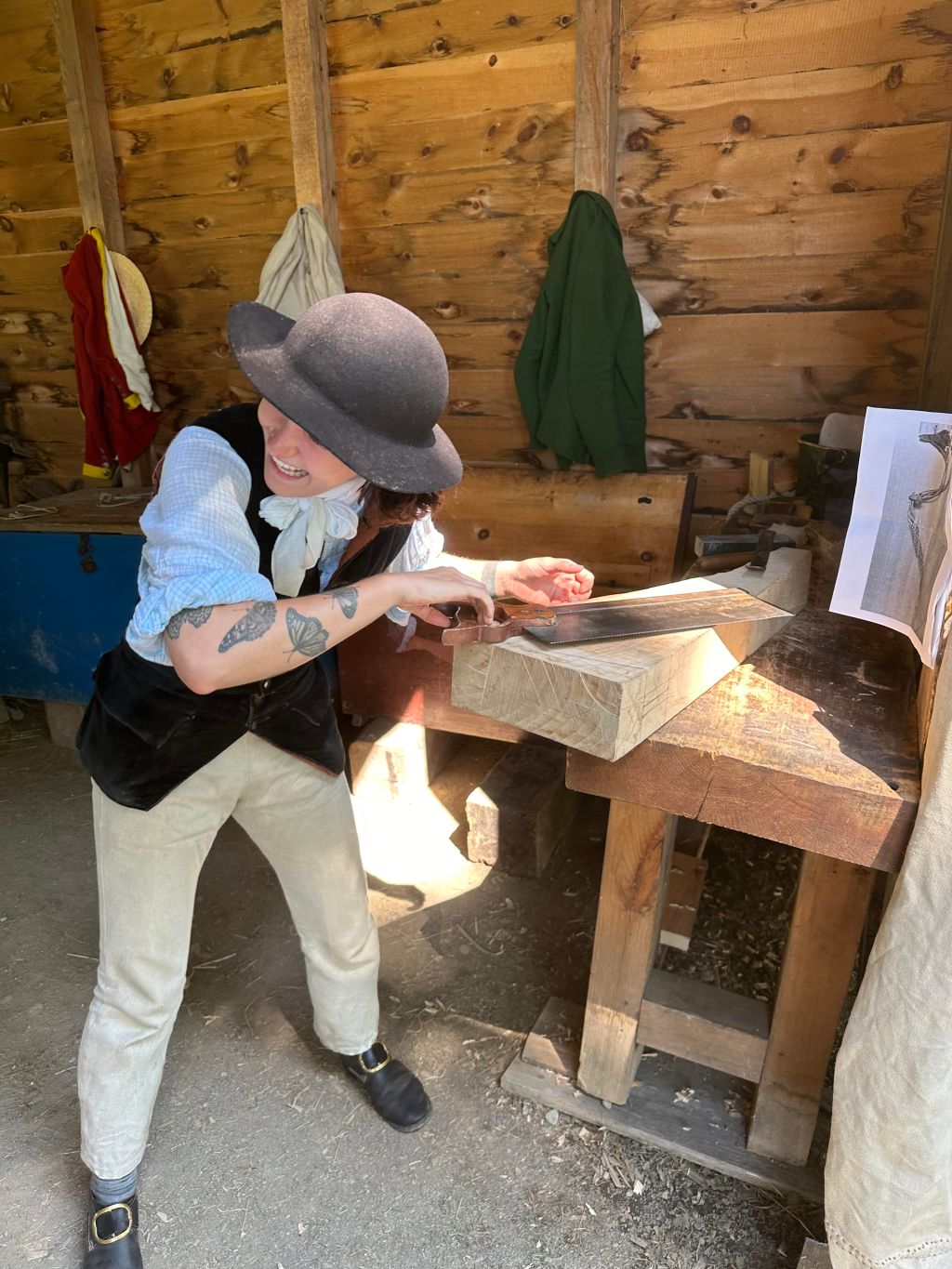
I work as a maritime trades interpreter at Fort Ticonderoga in upstate New York, which means, when I’m not giving tours, I build boats with techniques from the 18th century dressed like a British sailor from the 1770s. Because I work in maritime trades, the tailors issued me a wool coat with my hemp linen trousers and XXXL cotton shirt that opens all the way to my navel and makes me feel like Fabio when I don’t wear my waistcoat, but I’m lucky. I get to shed the coat.
I dress from the 1770s as part of my workplace’s Real Time Revolution, where we portray events from exactly 250 years ago. In 1774, the British army held the fort, so my colleagues portraying soldiers wear the British’s traditional wool redcoats.
On my tours, visitors frequently ask if we overheat. My colleagues, many of whom are also reenactors in their freetime, usually respond that wool is a natural fiber, so it breathes and keeps us cool. That’s a microdose of bullshit. Sure, the wool breathes a lot more than, say, polyester, but it’s like cooking something in parchment paper versus tin foil. The tin foil definitely reflects more heat, but, at a high enough temperature, the contents of either will cook either way.
And temperatures are certainly high enough. The EPA says most of New York state has warmed one to three degrees fahrenheit in the last century alone. Because the events we portray at the fort took place when there was a dip in global temperatures in the 1770s, the actual temperature difference is closer to five degrees.
That might not sound significant, but, on a day that felt particularly like the inside of a steam iron, a colleague of mine reminded me that we have records of British soldiers collapsing from heat exhaustion even in the 1770s. The climate extremes in North America pushed the British army to adapt its uniforms; when they fought in tropical climates in the 18th century, like the Havana Campaign during the Seven Years’ War, it was so dangerously hot, they traded most of the wool in soldiers’ clothing for linen.
At the fort, we portray historical clothing and trades as faithfully as we can, and changing British army uniforms would be revisionist, but increasing global temperatures and hot wool uniforms do pose the question, will living history and reenacting become casualties of global warming?
Compared to climate injustice and what climate refugees face, the inability to safely wear a wool redcoat is trivial, but it does highlight how overarching the effects of global warming are. If it affects how we talk about and teach history before we even started burning fossil fuels, what won’t it affect?
Probably not much, but maybe it’s when it affects our passions and ways of escaping it (like reenacting) that we’ll feel compelled to do something about it.

 Kira Rambles
Leave a comment